

Putin fears coup as Russia sinks into debt, drone strikes rise, and sanctions bite
 Read NV on Google
The Kremlin is gripped by panic as it runs out of options to
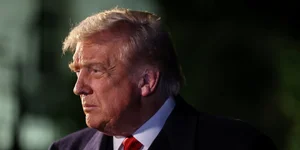
keep its power game alive while U.S. President Donald Trump tightens the
screws, The
Telegraph reported on Oct. 26, noting that Russian dictator Vladimir Putin
now fears another coup as Russia’s position begins to visibly erode.
Melissa Lawford, the article’s author, highlights that in
October, Russia’s Federal Security Service (FSB) opened a criminal case against
businessman Mikhail Khodorkovsky and members of the Russian Anti-War Committee,
accusing them of plotting a violent seizure of power and creating a terrorist
organization.
“Putin appears to once again see Khodorkovsky as a threat,”
she writes.
Khodorkovsky has dismissed the charges as false. Experts,
meanwhile, interpret the move as a clear sign of Putin’s growing vulnerability.
In a comment to The Telegraph, John Herbst — senior director
at the Atlantic Council’s Eurasia Center and former U.S. ambassador to Ukraine
— said the move indicates that “the Kremlin is slipping into paranoia.” He
added that Putin is hunting for enemies in an effort to shield his regime.

Putin, the article notes, has plenty of reasons to worry.
Russia’s economy is starting to buckle. Businesses are
paralyzed by soaring interest rates, and the Ministry of Economic Development
has warned the country is “on the verge of recession.” Warnings are mounting
about an avalanche of non-performing loans that could spark a financial crisis.
Meanwhile, small acts of defiance are emerging — hundreds of people recently
gathered in Saint Petersburg to sing a banned protest song calling for Putin’s
overthrow.
At the same time, Ukraine has ramped up drone strikes on
Russian oil refineries, and Trump has imposed sanctions on Russia’s two largest
oil companies. In response to Washington’s decision, India and China — Moscow’s
main oil buyers — have cut back on purchases. The result could be a sharp loss
of critical revenue for both Putin’s war machine and Russia itself.
Commenting on the developments, British economist Timothy
Ash — a research fellow in the Russia and Eurasia Program at Chatham House —
said Russia has taken a real hit for the first time in three and a half years.
He added that “there’s some panic” in Moscow.
A banking crisis is looming, Lawford writes. Russia’s
economy had shown resilience since the start of the full-scale invasion of
Ukraine, defying early forecasts of collapse after the first wave of Western
sanctions. One key reason for this resilience, the article says, is that the
Kremlin forced banks to issue loans to defense businesses without standard
credit checks.
The numbers are staggering. According to Craig Kennedy, a
Russia analyst and former banker, roughly 23% of all outstanding corporate
loans in Russian banks — at least $190 billion — are currently held by weapons
manufacturers. That’s equivalent to about 37% of Russia’s annual federal
budget.
All sectors of the economy are also struggling under the
weight of high interest rates. In October, Russia’s Central Bank cut its key
rate by 0.5 percentage points to 16.5%.
Still, The Telegraph concludes, the money is running out.
The war is also hitting the Russian population, as thick
plumes of smoke rise above refineries nationwide after waves of Ukrainian drone
attacks. The result has been a sharp spike in gasoline prices and growing
shortages at the pump.
Lawford recalls that Putin already faced a coup attempt in
June 2023, when Wagner Group chief Yevgeny Prigozhin staged a failed mutiny. He
later died in a plane crash.
But Khodorkovsky is not marching on Moscow, the author
writes, returning to the FSB’s decision to open a case against the former Yukos
chief. After his release from a Siberian prison, he moved to Europe and founded
the Anti-War Committee. In a comment to The Telegraph, Khodorkovsky said the
charges against him show that the Kremlin is “worried about the question of
succession.” He argued that in the event of Putin’s death, there is no clear
successor — and that “the international legitimacy of the opposition could become
a decisive factor in the event of a sudden power transition.”
He also said Western sanctions have caused serious problems
for Russia, and that Putin’s war machine is now heavily dependent on
cooperation with China.
To make matters worse, Russia is also facing a rapidly
growing budget deficit, the article notes.
“Trump has picked a particularly painful moment to start
tightening the screws on Putin,” Lawford concludes.
The military war may be swinging in our favor, but the information war continues.
Just as an army needs soldiers, so does a free society need its journalists to ensure that people have access to honest, trustworthy voices to understand the world around them.
For the past five years, The New Voice of Ukraine has been working tirelessly to push back against Russian narratives and defend democracy. But we cannot do it alone.
Please consider supporting us on Patreon for just $5 a month – your donation does directly to supporting journalists and ensuring that this front of the infowar says solid and defended.
Thank you.
Follow us on Twitter, Facebook and Google News
