


Unlocking finance in Ukraine: the ‘missing middle’ — opinion
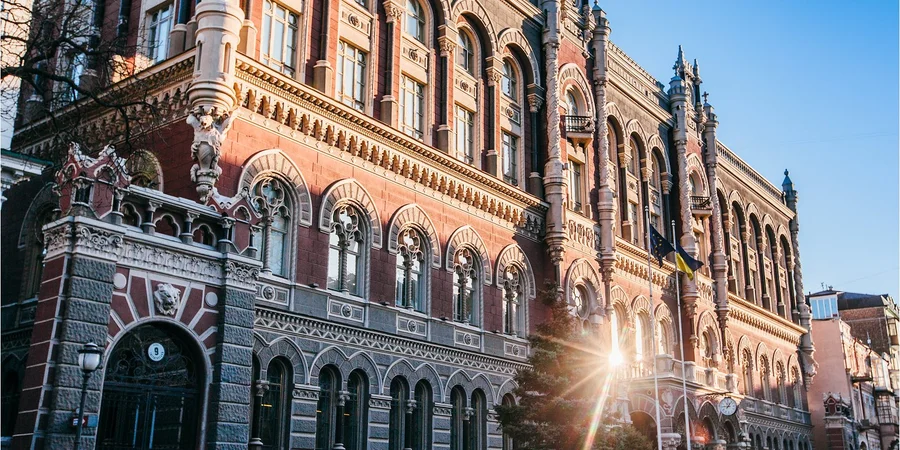
National Bank of Ukraine (Photo: NBU)
As the 2026 Financing for Development Conference
increasingly focuses on scale, leverage, and private capital mobilisation,
Ukraine offers a practical lesson: the real challenge is not just raising more
money, but making finance
work in crisis contexts where recovery and development must advance together.
Ukraine’s
recovery needs are immense. As
of 31 December 2025, direct damage is estimated at US$195.1 billion, a 10.8
percent increase since the last assessment, according to the Fifth Ukraine
Rapid Damage and Needs Assessment (RNDA5). Socioeconomic losses have reached
$666.7 billion, while total recovery and reconstruction needs over the next
decade are now estimated at $587.7 billion – nearly three times Ukraine’s 2025
GDP.
Resource
scarcity, however, is no longer the primary bottleneck. Significant financing
windows already exist through the state, the European Union, international
financial institutions (IFIs), and bilateral partners. Rather, the critical
challenge is whether this finance can be translated into high-impact
investments at the required pace and scale. Too often, it cannot.
In
fragile, high-risk environments, financing cannot follow a linear path from
recovery to development. It must operate across a continuum where current investments
stabilise systems and lay foundations for long-term transformation. This shifts
the role of finance from merely funding projects to managing risk, uncertainty,
impact and transition at scale.
Ukraine's experience demonstrates
that the primary constraints are often delivery and absorption capacity. Many recovery
projects remain stalled at the concept stage, requiring feasibility studies,
costing, structuring, and alignment with financing standards. Simultaneously, local
actors – including communities, municipal enterprises, and local businesses – often
lack the technical, institutional, or financial capacity to prepare to the
standards required by lenders and investors.
Unlocking
finance in Ukraine thus requires more than additional funding; it needs systems
that can move needs from ideas to actual investment. This is where blended finance – integrated with
de-risking and robust delivery systems – operates effectively in crisis and
recovery settings, ensuring capital flows where and when it is most critical.
In
Ukraine a clear lesson comes from the cooperation between UNDP and the European
Investment Bank (EIB): Finance works best when integrated with technical
assistance, implementation support, quality assurance, and risk mitigation.
Under EIB-supported recovery programmes, UNDP has helped the Government of
Ukraine absorb roughly EUR 1 billion in
loans while providing continuous technical assistance and quality assurance.
This went far beyond advisory inputs to include engineering oversight,
equipment procurement and installation support, financial monitoring, and
anti-corruption safeguards. This has enabled municipalities to deliver over 120
rehabilitated public facilities across 19 regions.
The EIB
District Heating Programme, for instance, demonstrates that technical
assistance is a core component of the financing architecture, not an optional
add-on. By narrowing the gap between available capital and bankable demand, it
ensures approved funding translates into completed projects rather than stalled
commitments.
This
logic drives the Local Development Finance Facility (LDFF) developed by UNDP in
Ukraine. Designed as a bottom-up platform, the LDFF starts with the realities
of communities rather than pre-defined funding. It identifies local needs,
aligns them with local plans and national priorities, and supports the
preparation of the projects that have the strongest economic rationale.
This sequencing
matters: Too often, recovery starts with available instruments and then searches
for projects to fit them. Ukraine’s context demands the reverse: start with
local demand, build a credible pipeline from the bottom up, and then match
projects with appropriate financing. The LDFF embodies this by combining targeted
technical assistance with financial de-risking instruments – such as interest
rate subsidies – to make existing financing more viable in wartime conditions. This approach
is vital in areas where market barriers remain high, such as affordable
housing, district heating, green transition investments, and MSME-linked local
recovery.
These issues
transcend Ukraine; many countries face similar barriers. While global capital
exists, it does not automatically flow to where it is most needed, or produce
results when it arrives. Without credible pipelines and risk-sharing
mechanisms, financing commitments often remain disconnected from delivery.
Ukraine’s
message for the Financing for Development Conference 2026 was clear: the bottleneck
lies in the “missing middle” – weak pipelines and risk perceptions that deter
investment at scale. A “360° financing loop” is essential, where bottom-up
demand is systematically translated into investment-ready pipelines. In this
model, blended finance is judged not by leverage ratios alone, but by its
ability to transform intent into execution – turning commitments into bankable
projects, and projects into tangible results.
Country
platforms must go beyond aggregate funding to embed local feasibility and
delivery capacity at their core. Ukraine’s experience proves that scale is
built from the ground up through credible project preparation, trusted delivery
systems, and financing architectures that internalise risk rather than
externalising it.
Ultimately, the value of UNDP’s
approach lies in its role as a system integrator – a bridge between high-level
policy, local project pipelines, and international financing partners. By
converting raw local demand into scalable, de-risked investments, UNDP ensures
that recovery is not just a series of disconnected repairs, but a cohesive
movement toward national transformation and EU integration. This model will
help to build the permanent institutional strength Ukraine needs to manage its
own future, and turn the “missing middle” into a robust engine for sustainable
development.
Will you support Ukraine’s free press?
Dear reader, as all news organizations, we must balance the pressures of delivering timely, accurate, and relevant stories with requirements to fund our business operations.
As a Ukrainian-based media, we also have another responsibility – to amplify Ukraine’s voice to the world during the crucial moment of its existence as a political nation.
It’s the support of our readers that lets us continue doing our job. We keep our essential reporting free because we believe in our ultimate purpose: an independent, democratic Ukraine.
If you’re willing to support Ukraine, consider subscribing to our Patreon starting from 5$ per month. We are immensely grateful.
Please help us continue fighting Russian propaganda.
Truth can be hard to tell from fiction these days. Every viewpoint has its audience of backers and supporters, no matter how absurd.
If conscious disinformation is reinforced by state propaganda apparatus and budget, its outcomes may become deadly.
There is no solution to this, other than independent, honest, and accurate reporting.
We remain committed to empowering the Ukrainian voice to push against the muck. If you’re willing to stand up for the truth – consider supporting us on Patreon starting from 5$ per month. Thank you very much.
Will you help tell Ukraine’s story to the world?
Twenty years ago, most people hadn’t even heard of Ukraine. Today, the country is on everyone’s lips and everyone’s headlines. War pushed us on the front page. But there are many other things we do that we are proud of – from music and culture to technology.
We need your help to tell the world Ukrainian story of resilience, joy, and survival. If you’re willing to back our effort, consider supporting us on Patreon starting from 5$ per month. We are immensely grateful.
Follow us on Twitter, Facebook and Google News
