

U.S. Air Force general: No legal barrier to American pilots flying under Ukrainian command
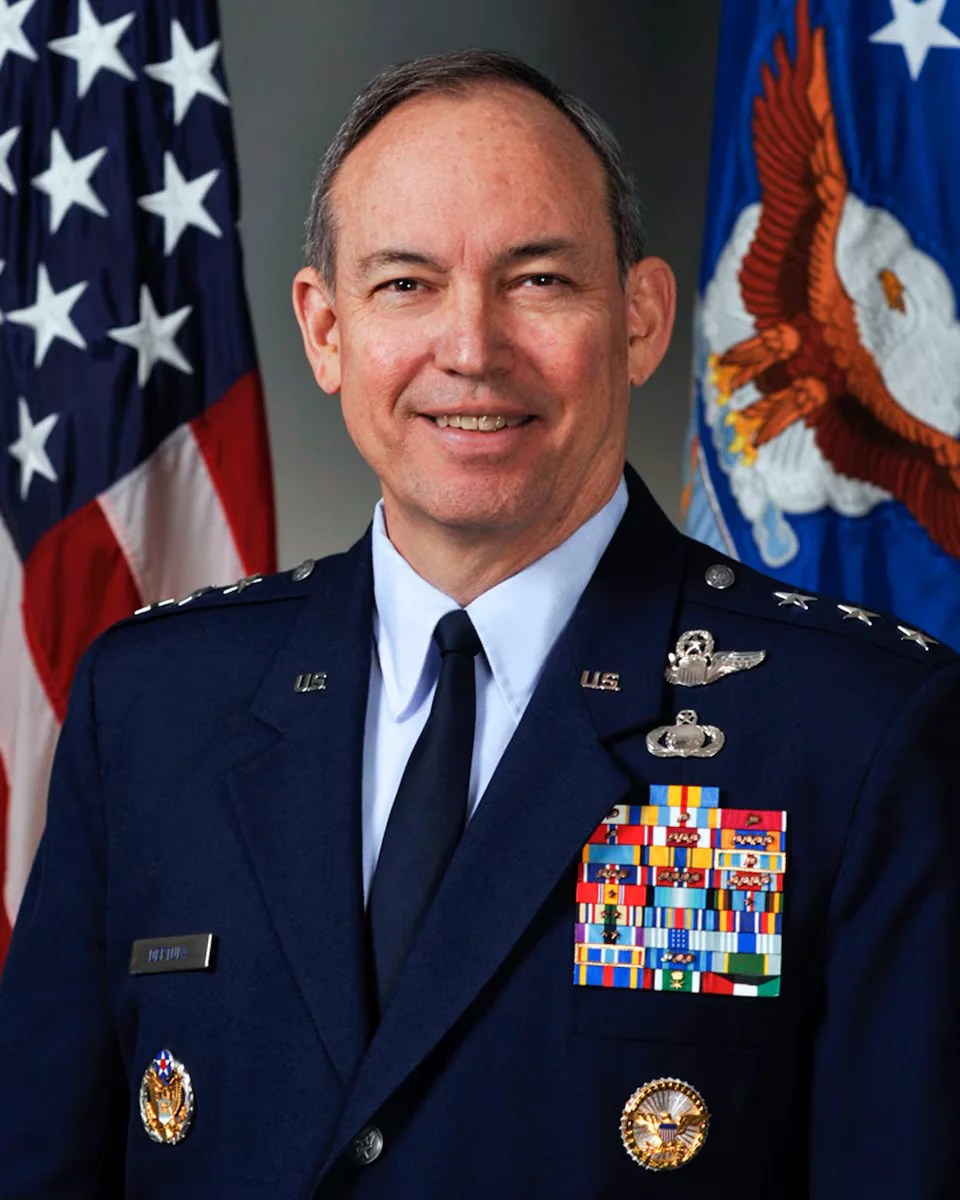
As Russia ramps up its assault on Ukrainian cities and frontline positions, retired U.S. Air Force Lieutenant General David A. Deptula says it’s time to lift restrictions on Ukraine’s use of long-range weapons. Deptula, one of the key architects of modern airpower strategy, made the case in an exclusive interview with Ukrainian-American writer and U.S. Air Force veteran Elisa Carlisle for The New Voice of Ukraine. He calls for a fundamental shift in U.S. policy, warning that current limits give Moscow an undeserved sanctuary. Deptula explains why air superiority is decisive, dismisses nuclear blackmail fears, and urges the West to start deterring Russia—not itself.
Elisa Carlisle: Thank you for joining us. We’re speaking with retired Lt. Gen. David Deptula about Ukraine and the future of the war. Let’s start with the central question: Why Ukraine? Why do you support its cause so strongly?
Gen. Deptula: That’s an important place to start. Simply put, Russia’s invasion of Ukraine was entirely unjustified.
It was a blatant act of aggression. The Ukrainian people are now engaged in an existential fight—not only for their nation’s survival, but for the same rights and freedoms that Americans consider fundamental.
Maybe “sacrosanct” isn’t quite the right word here, but I’d call them the inalienable rights of all human beings.
The key point is this: Russia’s unprovoked assault must be stopped—not only because it threatens Ukraine, but because it has far-reaching implications for Europe and for U.S. national security.
Unchecked aggression, in any era, invites more of the same. The fact that Russia is doing this in the 21st century is both shocking and unacceptable to free nations everywhere.
Elisa Carlisle: As you noted, Russian aggression cannot go unchecked. But we’ve heard the Kremlin’s narrative. They claim they’re defending the rights of Russian-speaking Ukrainians, who they say are victims of U.S. and Ukrainian propaganda. They also frame NATO as a hostile force and claim their full-scale invasion was preemptive—meant to stop an inevitable NATO attack. How do you respond to that?
Gen. Deptula: That’s complete nonsense—pure propaganda.
Let’s return to the facts. Russia violated a formal agreement it signed with Ukraine and the United States in the 1990s, which guaranteed Ukraine’s sovereignty in exchange for giving up its nuclear arsenal.
You can’t invade a sovereign, internationally recognized country and then blame your victim for the war.
And just to clarify—NATO is not fighting this war. It’s Ukraine’s people and armed forces who are defending their country. They’re the ones confronting Russian aggression head-on.
Elisa Carlisle: Exactly. Russia keeps invoking NATO as a pretext, claiming, “You came too close—you shouldn’t be holding military exercises in the Black Sea or near our border.”
Gen. Deptula: That’s absurd. We’re talking about international airspace. Their argument doesn’t hold up.And it’s important to note that none of these claims are recognized as legitimate under international law—not by the United Nations or any credible global body.
Elisa Carlisle: So looking ahead—based on your military experience, what would you advise Ukraine to do right now to secure the best possible outcome?
Gen. Deptula: That’s a tough and multi-layered question. President Zelenskyy and his military leadership are facing tremendous challenges.
But before we talk strategy, it’s critical to acknowledge just how much the Ukrainian Armed Forces have already accomplished. They’ve not only repelled the initial Russian invasion and stopped the assault on Kyiv, but they’re also holding the line under extremely difficult conditions—against a much larger enemy with greater resources.
That’s an extraordinary achievement.
Now, while the United States and NATO allies deserve credit for the support they’ve provided, one major issue remains: the restrictions placed on Ukraine’s use of Western-supplied weapons.
Specifically, prohibiting Ukraine from striking targets inside Russian territory has effectively created a sanctuary for Russia. That sanctuary is a strategic gift to the Kremlin—and a costly handicap for Ukraine.
These restrictions should be lifted immediately. Frankly, they should never have been imposed.
Elisa Carlisle: Why were they imposed in the first place?
Gen. Deptula: The driving concern, especially in Washington and some NATO capitals, has been the fear of escalation—specifically, triggering a broader conflict or provoking a nuclear response from Russia.
There are no perfect solutions in war—no silver bullets. But this situation mirrors David versus Goliath. And when you tie one of David’s arms behind his back—refusing to let him use his sling, even when he has the stone—you’re severely limiting his chances of success.
That’s what we’re doing to Ukraine right now.
Elisa Carlisle: While both Presidents Biden and Trump have repeatedly stated that there will be no U.S. boots on the ground in Ukraine, many American veterans are already serving in Ukraine’s International Legion, bringing their expertise and courage to the fight against Russian aggression. In your opinion, are there any legal or practical barriers that currently prevent U.S. pilots from contributing to Ukraine’s defense, particularly given the Air Force’s vital role in this war?
Gen. Deptula: There’s no legal prohibition that outright prevents U.S. pilots—those no longer on active duty—from supporting Ukraine, just as many U.S. ground veterans have done. The real challenge is practical and political, not legal. Flying an F-16 in combat isn’t just about sitting in the cockpit—it’s about full integration into command and control systems, rules of engagement, and the overall air campaign plan. That said, with proper diplomatic channels and agreements in place, it’s entirely feasible to allow experienced American pilots to contribute—particularly in advisory or training roles, as well as in combat if they fly under Ukrainian command. But that requires political will on both sides. Let’s not forget: Ukraine’s air defense depends heavily on Western-supplied systems, and American pilots bring unmatched expertise in maximizing those systems' potential. If the decision were made, and the integration issues worked out, they could make an immediate difference.
Elisa Carlisle: Given the Air Force’s critical role in countering drone and ballistic missile attacks—and the fact that Ukraine’s F-16s, in their current state, are still limited in capability—what modernization support can the United States and other Western partners provide to improve these aircraft’s effectiveness, including their ability to detect and engage Russian targets at long range or intercept ballistic missiles?
Gen. Deptula: Getting the airframes is just step one. To make Ukraine’s F-16s as effective as possible, we need to help them field the full system of capabilities that gives Western air forces their edge.
That includes: Advanced AESA radar upgrades for long-range detection and targeting, modern air-to-air missiles like the AIM-120D or meteor to counter Russian fighters at stand-off distances, electronic warfare pods to survive in contested environments, targeting pods and ground mapping capabilities for precision strikes, and most importantly—integration into a broader command, control, and sensor network, including data feeds from drones, AWACS, and satellite surveillance.
Right now, Ukraine’s challenge isn’t just about flying aircraft—it’s about surviving and winning in one of the most contested airspaces in the world. With proper modernization and support, the F-16s can provide air superiority, support ground forces, and help intercept cruise and ballistic missiles. But it’s going to take sustained investment and partnership—not just delivery. That said, Ukraine does need increased numbers of F-16s.
Elisa Carlisle: Do you believe the West’s self-imposed limits on striking Russian territory have actually emboldened Putin—and how should NATO and the U.S. be rethinking deterrence?
Gen. Deptula: The point is, Russia has been granted an artificial sanctuary—an advantage it never earned—because of Western-imposed restrictions on Ukraine.
But recent Ukrainian operations inside Russian territory have already exposed the myth that nuclear powers can’t be challenged without triggering Armageddon.
Russia won’t use nuclear weapons—not tactical, not strategic. And clearly, Ukraine doesn’t believe Putin will either. If they did, they wouldn’t be conducting cross-border raids.
That’s the reality: Putin is a bully. He only respects strength. And the ones who should be doing the deterring are the United States and NATO—not the other way around.
Right now, we’re sending the wrong message—not just to Moscow, but to Beijing as well. Xi Jinping is watching closely to see how Washington responds to nuclear blackmail. The implications go far beyond Ukraine.
Even more concerning, the current restrictions on Ukraine’s ability to strike back with Western-supplied weapons send a dangerous message—one that could actually encourage nuclear proliferation.
We’re effectively telling the world: “If you want to prevent U.S. or NATO intervention, just get nuclear weapons. Once you have them, we won’t risk a conventional military response.”
That’s a terrible precedent—one with long-term global consequences.
Elisa Carlisle: You mentioned Xi. We’ve seen increased coverage of China and Russia military and economic cooperation.
Should we view this partnership as a serious threat to the United States and NATO? These are two major powers. Their relationship may not be close, but it’s clearly strategic.
Gen. Deptula: I wouldn’t call it a direct threat in the immediate sense. But it’s absolutely a strategic challenge.
Their cooperation signals a shared intent to undermine U.S. and NATO interests. Just recently, for the first time ever, China and Russia jointly flew bomber missions into the U.S. air defense identification zone.
So yes—there’s real coordination happening. And frankly, without China’s economic support, Russia would be in much deeper trouble.
China has helped Russia weather the financial fallout of Western sanctions. That support has enabled Moscow to sustain its war effort in Ukraine.
Without that backing, Russia’s position would be significantly more precarious.
Elisa Carlisle: With the Israel-Iran war and recent U.S. involvement dominating global headlines, attention has noticeably shifted away from Russia’s war against Ukraine. In your opinion, what impact could this renewed focus on the Middle East have on international support for Ukraine and the broader dynamics of the war with Russia?
Gen. Deptula: It’s true the spotlight has shifted, but the stakes in Ukraine haven’t changed—and neither should our commitment. The danger is that with global attention now centered on the Middle East, Ukraine risks being treated as yesterday’s war. That would be a strategic mistake.
Let’s be clear: Russia is counting on the world to lose focus. Their entire theory of victory depends on outlasting Western resolve. If support begins to erode—militarily, politically, or financially—Russia will exploit that vacuum and press harder.
At the same time, the Israel-Iran conflict actually reinforces why Ukraine matters. We’re in a global era of strategic disorder, with authoritarian regimes testing the boundaries of international will—from Tehran to Moscow to Beijing. The message we send in Ukraine reverberates across every theater. If we cave on Ukraine while confronting Iran, we undermine our credibility everywhere.
So yes, we can and must manage both challenges. Supporting Ukraine is not a distraction from global security—it’s a core part of it. Pulling back now would not just risk Ukraine’s future—it would embolden every adversary watching
Elisa Carlisle: Ukrainians have gained a reputation for turning $20 Amazon parts into functional combat drones, working with local engineers to build systems that destroy multi-million-ruble Russian equipment—with remarkable success.
Should the U.S. rethink its massive defense spending and adopt more low-cost, high-impact tactics?
Gen. Deptula: It’s a fair question, but we have to understand the broader context.
Yes, Ukraine’s low-cost drones are effective in the battlespace they’re operating in—typically within five to ten kilometers. But those tactics don’t translate to global power projection.
Ukraine is fighting a conventional, high-intensity war within a single theater. The United States, by contrast, has global security commitments.
We have to maintain a forward presence, deter aggression across continents, and support peace and stability worldwide. That requires far more capability and infrastructure than a single-theater conflict.Part of our national security strategy involves rotating U.S. forces—soldiers, sailors, airmen, Marines, and Guardians—through key forward positions. That’s how we deter conflict before it begins.
And we must be prepared to fight and win in more than one major regional conflict simultaneously. That’s essential for credible deterrence.
So yes, Ukraine’s resourcefulness is impressive—and highly effective for their specific situation. But the scale and scope of U.S. defense responsibilities require a very different level of investment.
Elisa Carlisle: Ukraine will always border Russia—so how can true freedom and security be guaranteed in the long term? What’s the right path forward?
Gen. Deptula: The short answer: Ukraine must ultimately be allowed to join NATO and the European Union. I’m not suggesting it could happen today or tomorrow, but eventually joining NATO is the surest guarantee of lasting security.
Elisa Carlisle: Why has the war in Ukraine become so static—resembling trench warfare—and what role does air superiority play in breaking that deadlock?
Gen. Deptula: That’s a fascinating question. What’s remarkable is how many people have been—well, the word is probably “shocked”—that this war has devolved into trench warfare, reminiscent of World War I.
One major reason for that is neither side has achieved air superiority.
Air superiority gives you the freedom to strike ground and aerial targets while shielding your own forces from attack. If you control the skies, you can intercept drones, neutralize hypersonic missile threats, and strike enemy aircraft before they even take off.
That’s why lifting restrictions on long-range weapons is so critical. Ukraine must be able to strike Russian air bases launching attacks. Without that ability, it can’t neutralize the threat.
The military war may be swinging in our favor, but the information war continues.
Just as an army needs soldiers, so does a free society need its journalists to ensure that people have access to honest, trustworthy voices to understand the world around them.
For the past five years, The New Voice of Ukraine has been working tirelessly to push back against Russian narratives and defend democracy. But we cannot do it alone.
Please consider supporting us on Patreon for just $5 a month – your donation does directly to supporting journalists and ensuring that this front of the infowar says solid and defended.
Thank you.
Follow us on Twitter, Facebook and Google News
